




Celebrating Pride With A History Of Same-Sex Marriage In Canada

same-sex marriage
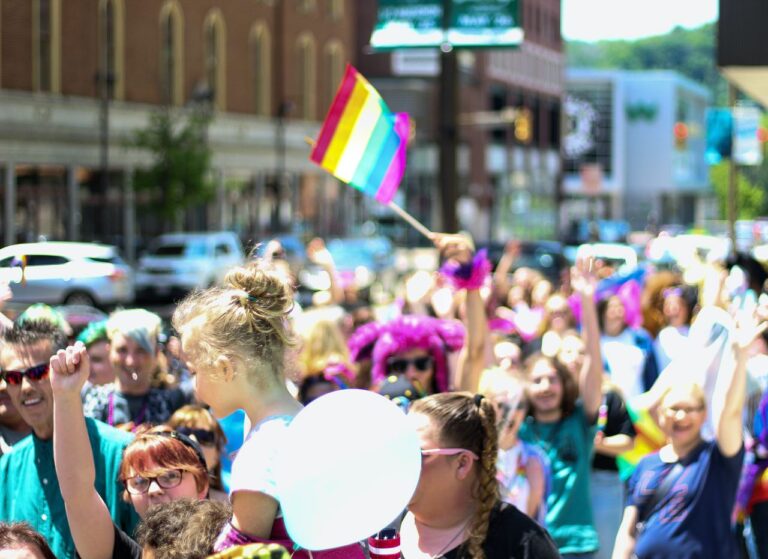
June is recognized around the world as Pride Month, to commemorate the Stonewall Riots that happened in New York City at the end of June in 1969. In recognition of Pride month, Evolve Law would like to provide a brief overview of the history of same-sex marriage in Canada and an overview of the rights of same-sex couples going through a family transition period. 

Simply put, today in Canada all couples regardless of sexual orientation receive the same legal rights. This includes the equal rights and obligations when it comes to being considered spouses, applying for spousal support, applying for child support, and determining property division in a divorce.

However, it hasn’t always been this way. Back in 1866 the House of Lords in England found that marriage was defined as the “voluntary union for life of one man and one woman, to the exclusion of all others” (Hyde v. Hyde and Woodmansee). Since Canada was a British colony up until 1982, Canada had to follow British court decisions. Throughout the 1990s Parliament, taking their lead from the Canadian Courts, decided that discriminating on the basis of sexual orientation went against the Charter of Rights and Freedoms. 

The Supreme Court of Canada recognized in 1997 that same-sex couples fit the legal definition of “conjugal” and that differential treatment was illegal. Then, in 2003, the Court reformulated the common law definition of marriages as “the voluntary union for life of two persons to the exclusion of all others.” 

The watershed moment for same-sex couples came with the Reference re Same-sex Marriage in 2004. Following various cases across the country where the Courts said that a “one man and one woman” definition of marriage violated the Charter, Parliament wanted to amend and legislate a new definition of marriage.

While the court emphasized that they were not trying to find the definition of marriage but were only looking if Parliament’s proposed meaning fit within the definition, they found that the meaning of marriage was not fixed to what it meant in 1867, but rather that it must evolve with Canadian society, which currently represents a plurality of groups. They also made sure to emphasize that the legislation was only concerning civil marriages as a legal institution and had no effect on religious marriages. The Court therefore found that two persons, regardless of gender, are legally capable of being marriage. 

Same-sex couples could get married in 2004, with the Civil Marriage Act coming into effect in July of 2005. 

A “spouse” is therefore now defined as two people that either live together continuously for a period of two years (common-law) or two people that participated in a marriage ceremony. You can also qualify as a spouse under the Family Maintenance Act if you are coparents of a child. If you participated in a marriage ceremony, you would look for various remedies under the Divorce Act. However, if you are common-law or you are coparents of a child you would look for remedies under the Family Maintenance Act. Finally, a spouse is defined under the Family Property Act, which governs property division.  

Leave a Reply

Your email address will not be published. Required fields are marked *

*

Tags:

Celebrating Pride With A History Of Same-Sex Marriage In Canada

EN, FR, ES

Important Disclaimer

DISCLAIMER: As our law office extends its services nationally under the National Mobility Agreement (NMA), we are committed to providing transparent information regarding the scope and limitations of our practice in various jurisdictions.

The NMA facilitates both temporary and permanent mobility of lawyers across Canadian jurisdictions, allowing for the provision of legal services beyond our home province. However, certain conditions and limitations apply, as outlined in the NMA.

Temporary Practice:

  • Regulatory Compliance: Lawyers must comply with the professional conduct and ethical standards of the host jurisdiction.
  • Insurance Requirements: Lawyers must carry professional liability insurance that meets the standards of the host jurisdiction.
  • Scope of Practice: Temporary practice does not extend to areas of law specifically reserved to practitioners licensed in the host jurisdiction.

Permanent Practice:

For clients seeking services requiring permanent practice outside our primary provinces, we provide a directory to help you find a local lawyer.

Limitations:

  • Unauthorized Practice: Engaging in unauthorized legal practice outside of temporary allowances is not permitted.
  • Practice in Quebec: The NMA primarily applies to common law jurisdictions, and different rules may apply for practice in Quebec.

For a full understanding of the agreement, please visit the National Mobility Agreement on the Federation of Law Societies of Canada website.

If you have any questions or need further clarification about our practice in a specific jurisdiction, please contact us directly.

  • Book Instantly
  • Standard Booking
  • Standard Booking
  • Emergency Request
Book InstantlyStandard BookingStandard BookingEmergency Request
$99
15 min
$99
15 min
$500
45 min
$299
15 min
Consult Format
Telephone
in-person
videocall
Telephone callTelephone callTelephone call
In-person
Videocall
Telephone call
Availability Window1 hr before & 1 hr after (135 min) 1 hr before & 1 hr after (135 min)Set time (45 min)Set time (15 min)
Lawyer Selection
Lawyers are assigned based on availability for instant and emergency requests
Your choiceYour choiceYour choiceNext available
Payment Options
Standard booking receives credit card, e-transfer, paypal, debit, cheque, & cash.
Credit Card
Paypal
Credit Card
E-transfer
Paypal
Debit
Cheque
Cash.
Credit Card
E-transfer
Paypal
Debit
Cheque
Cash.
Credit Card
Paypal
Speak to a Lawyer
Minimum notice to book.
Within 1-2 business days*Within 2-3 business days*Within 2-3 business days*Within 24 hours*
Get StartedGet StartedGet StartedGet Started

Based on availability*